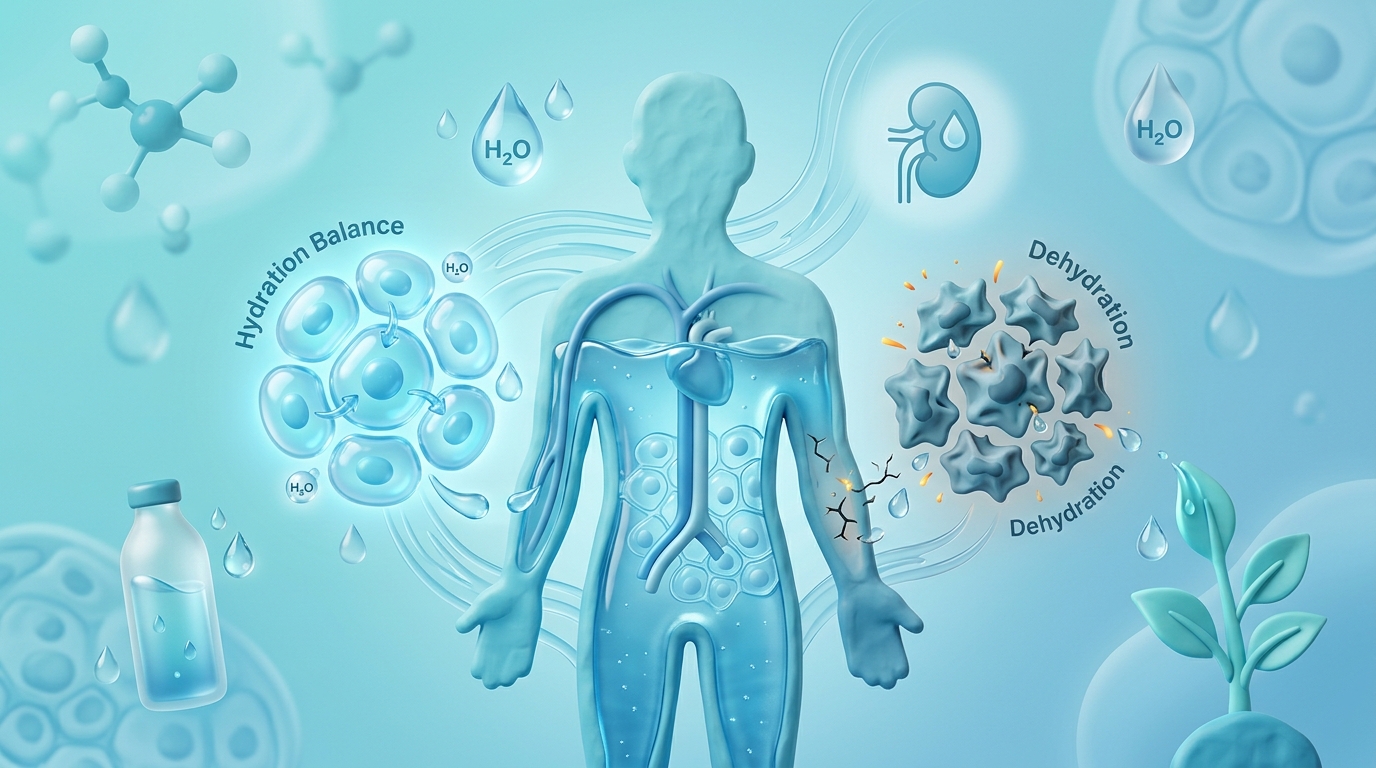
 Clinical Pathology
Dehydration Stages & Clinical Symptoms: Mild to Critical
Learn how fluid deficits from 1% to 5%+ alter cerebral perfusion, cardiovascular stroke volume, and kidney filtration, and how to spot early signs before thirst strikes.
Calibrated with clinical algorithms incorporating body mass, metabolic energy expenditure, thermoregulatory sweat rates, and atmospheric climate.
A personalized tool that calculates your daily water intake based on your body, your routine, and your environment.
A hydration calculator estimates your daily water needs based on body weight, activity, climate, and sex — replacing generic "8 glasses a day" advice with formulas tailored to your actual physiology.
The calculation begins with a baseline of 35 ml per kg (0.5 fl oz/lb) of body weight, adjusted by key factors:
Standards are calibrated from clinical guidelines by the National Academy of Medicine (NAM), EFSA, and ACSM.
Answer 3 questions to estimate your current hydration status
Each input modifies your water intake recommendation
Follow these 5 simple steps to get your personalized daily water intake:
Daily water intake varies by age, sex, and body size — here are the evidence-based numbers from 3 leading health organizations.
| Demographic Group | NAM (US/Canada) | EFSA (Europe) | Beverage Portion (~80%) |
|---|---|---|---|
| Adult Men (19–50 years) | 3.7 L (125 fl oz) | 2.5 L (84.5 fl oz) | 3.0 L (101 fl oz) |
| Adult Women (19–50 years) | 2.7 L (91 fl oz) | 2.0 L (67.6 fl oz) | 2.2 L (74 fl oz) |
| Pregnant Women | 3.0 L (101 fl oz) | 2.3 L (77.8 fl oz) | 2.4 L (81 fl oz) |
| Lactating Women | 3.8 L (128.5 fl oz) | 2.7 L (91 fl oz) | 3.1 L (105 fl oz) |
| Children (4–8 years) | 1.7 L (57.5 fl oz) | 1.6 L (54 fl oz) | 1.2 L (40.6 fl oz) |
| Adolescents (14–18 years, male) | 3.3 L (111.6 fl oz) | 2.1 L (71 fl oz) | 2.6 L (87.9 fl oz) |
| Adolescents (14–18 years, female) | 2.3 L (77.8 fl oz) | 1.9 L (64.2 fl oz) | 1.8 L (60.9 fl oz) |
| Older Adults (51+ years) | 3.7 L / 2.7 L | 2.5 L / 2.0 L | Thirst perception decreases with age — active monitoring recommended |
Drinking water, coffee, tea, juice, milk, and other liquids. The Academy of Nutrition and Dietetics confirms that moderate coffee consumption (up to 400 mg caffeine per day) counts toward daily hydration.
Water-rich fruits and vegetables — cucumbers (96% water), watermelon (92%), oranges (87%), celery (95%), and soups contribute 500–800 ml (17–27 fl oz) of fluid per day in a balanced diet.
Hover over each food to see its water percentage
There are 7 factors that change how much water your body requires each day. Here is each factor explained with its impact level.
Hover each bar to see the impact range
Compare daily water intake targets across 4 activity levels and 6 body weight ranges — adjust climate to see real-time changes.
Daily hydration needs range from 1,750 ml (59 fl oz, approximately 1.75 L) for a sedentary 50 kg (110 lb) adult to over 5,250 ml (177 fl oz, approximately 5.25 L) for a very active 100 kg (220 lb) adult. The table below shows estimated daily water intake targets across 4 activity levels and 6 body weight ranges. Each value uses the base formula of 35 ml per kg of body weight, activity multipliers from 1.0× to 1.5×, and includes 360 ml (12.2 fl oz) for a standard 30-minute exercise session at 12 ml per minute. Click a climate button to recalculate all values for your environment.
| Body Weight | Sedentary1.0× | Light Active1.15× | Moderate1.30× | Very Active1.50× |
|---|
Clinically validated 8-tier visual scale developed by Dr. Lawrence E. Armstrong (Human Performance Laboratory). Select a color swatch below to assess your current urinary specific gravity and osmolality status.
Kidneys are effectively clearing solutes without conservation mode. Plasma sodium and antidiuretic hormone (AVP) levels are stable.
The hydration calculator above gives you an everyday water goal. These 13 calculators answer narrower questions, from marathon drinking plans and creatine mixing to how much water your dog or cat needs.
Answers to the 9 most common questions about daily water intake, the hydration calculator, dehydration, and fluid balance.
Men need about 3.7 L (125 fl oz) and women about 2.7 L (91 fl oz) of total water a day, food included.
It multiplies your weight by 35 ml per kg (0.5 fl oz per lb), then adjusts for activity, climate and sex.
Yes, multiply your weight in kg by 35 to get ml, or your weight in lb by 0.5 to get fl oz.
Yes, men need about 1 L (34 fl oz) more water a day than women: 3.7 L versus 2.7 L.
Yes, sip 150–250 ml (5–8 fl oz) every 15–20 minutes while you exercise.
Yes, hot, humid weather raises your needs by about 25%, and the calculator adds that for you.
The 7 common signs are dark urine, dry mouth, thirst, headache, fatigue, dizziness and slow skin recoil.
Yes, drinking more than about 1 L (34 fl oz) an hour can dilute blood sodium and cause hyponatremia.
It suits most healthy adults, but anyone with kidney, heart or liver disease should follow a doctor's advice.
Explore our latest evidence-based clinical guides, electrolyte biochemistry, and athletic hydration protocols.
Clinical PathologyLearn how fluid deficits from 1% to 5%+ alter cerebral perfusion, cardiovascular stroke volume, and kidney filtration, and how to spot early signs before thirst strikes.
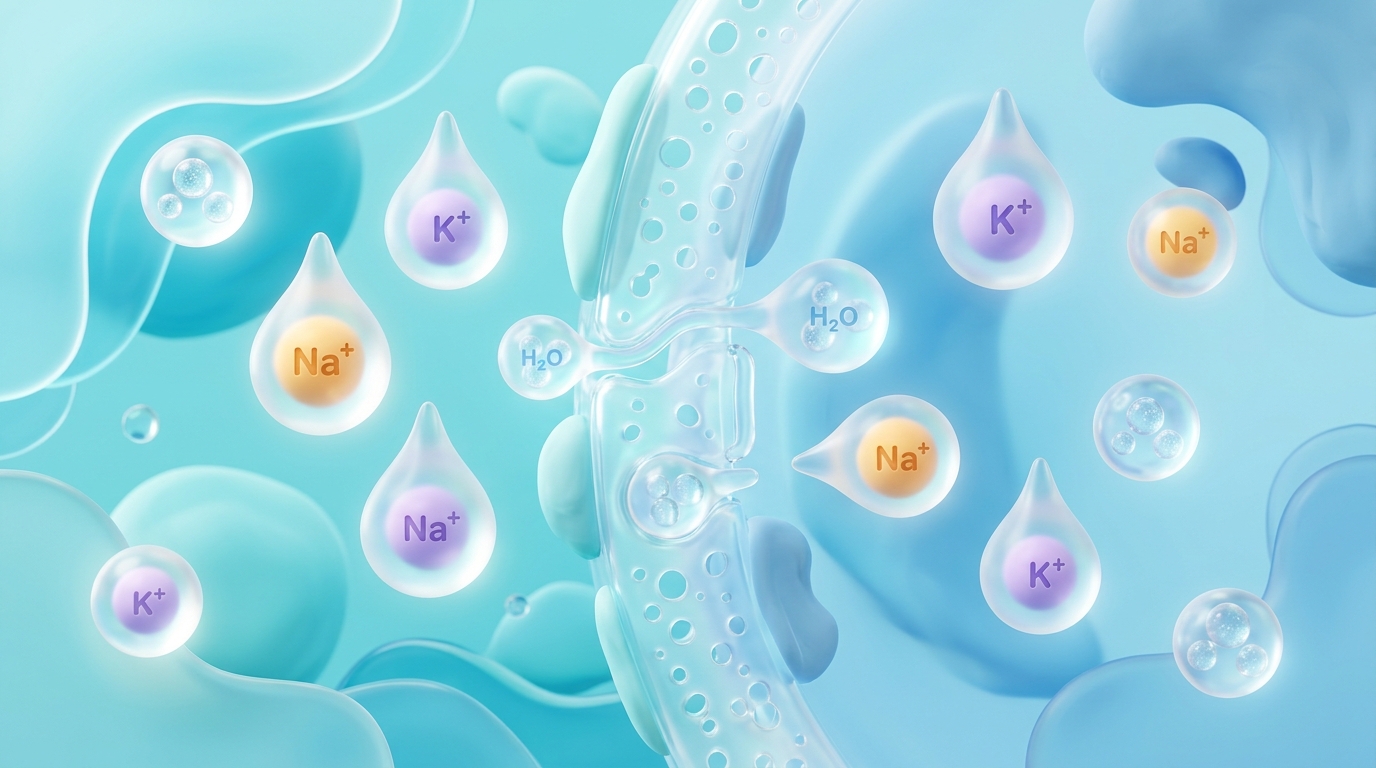 Biochemistry
Why drinking plain water without sodium can lead to cellular flushing or hyponatremia. An in-depth examination of the sodium-glucose cotransport mechanism and tonicity.
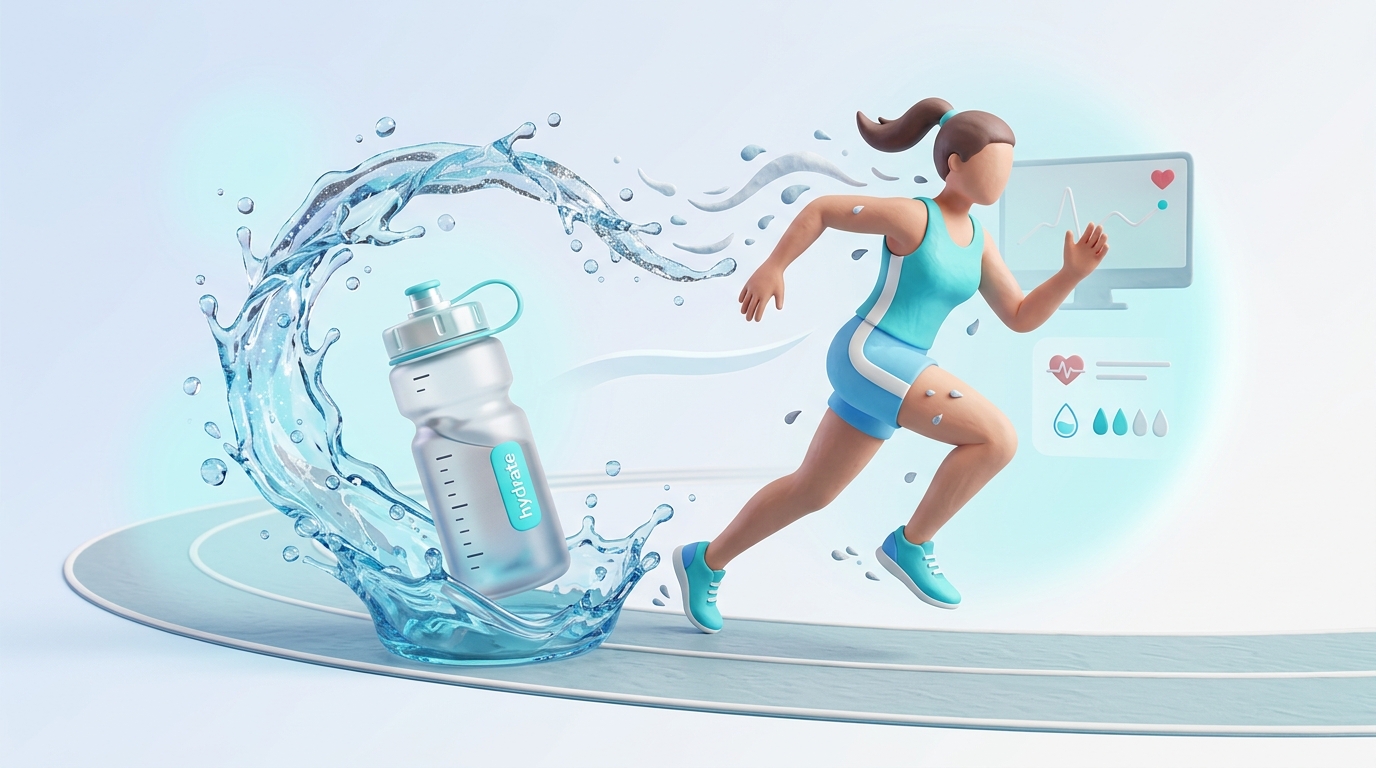 Sports Nutrition
Step-by-step guidance on pre-event fluid priming, calculating your personalized sweat rate (L/hr), mid-race electrolyte fueling, and avoiding heat exhaustion.